Everything you need to know about a gong bath

Everything you need to know about a gong bath
There is no way to know anything about a gong bath that will beat the experience itself. The first thing to know about a gong bath is that you just have to be there to know what it is. That said, here is an article with all kinds of useful information. It covers everything — from what actually happens in the room, to the science behind it, to what to do when it's over. Read what is useful to you. Leave the rest.
What is a gong bath?
People hear the words "gong bath" and immediately think of water. Or they think of something exotic, something spiritual, something not quite for them. Both assumptions are wrong. A gong bath is simpler than you think — and stranger than you can imagine until you've been.
What is a gong bath?
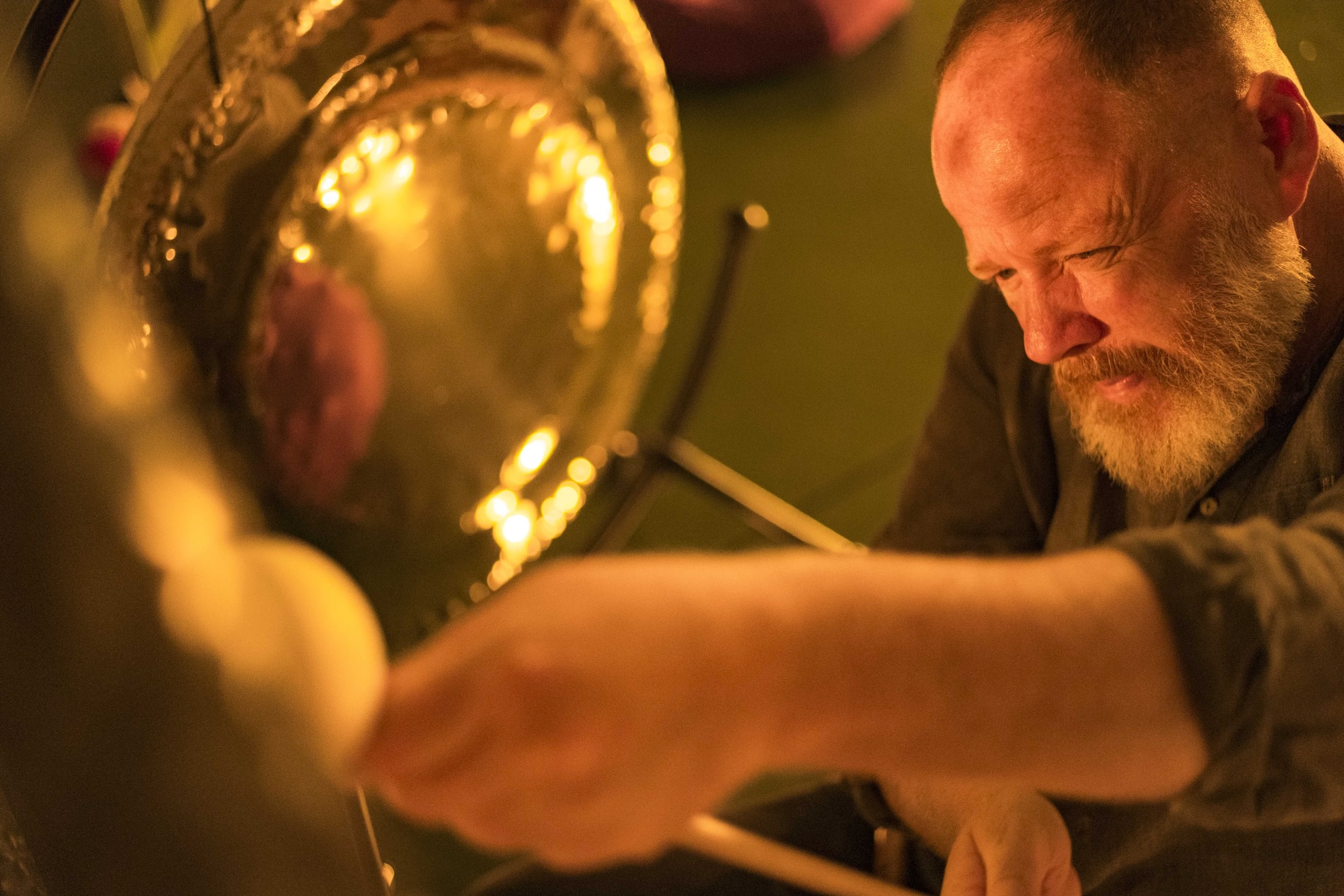
A gong bath is sound meditation. You lie down fully clothed on a mat, close your eyes, and are immersed in the sound of live gongs played at close range. Nothing is asked of you. You don't move, speak, or perform. You receive.
The name has nothing to do with water. You are bathed in sound — surrounded by it, held inside it. Most people find it deeply restful. Some find it unexpectedly moving. A few find it ordinary. All of these responses are perfectly fine.
Why is it called a "bath"?
Because you are immersed. Just as a bath surrounds the body with water, a gong bath surrounds you with sound — from every direction, at every frequency, penetrating the body rather than merely passing through the ears. The word "bath" is more accurate than it first appears.
How long does a session last?
A standard Das Gongbad session runs approximately 90 minutes. This breaks naturally into two parts: roughly 60 minutes of live gong sound followed by 30 minutes of guided silence.
That silence is not empty time. It is, in many ways, the most valuable part. After an hour of rich vibration, the quiet becomes extraordinarily alive. No one has ever complained that the 30 minutes of silence is too long.
How many people are typically in a session?
Sessions vary. Regular Tuesday evening sessions at Das Gongbad typically host between 10 and 25 people. Special events may be smaller or larger. The room size and the number of gongs determine the natural limit — not a quota.
Whatever the number, each person has their own space. The experience is individual. You will barely notice anyone else is there.
Do you offer all-night sessions?
Yes. Occasionally Das Gongbad hosts all-night gong ceremonies — extended sessions that carry participants from evening through to dawn. These are rare, RSVP-only events.
There is something the all-night format reveals that a 90-minute session cannot. When you stay through the night with others — each in your own cocoon, silent, held by the sound — the edges between people soften in a way that words never quite achieve. The group holds you, even as you remain entirely alone with yourself. It is one of the most quietly extraordinary things I have experienced in ten years of this work.
Can I sit instead of lie down?
Yes. Lying down is the recommended position because it allows the body to relax most fully and the vibrations to move through you most freely. But if lying on the floor is uncomfortable — whether due to a back condition, a recent injury, pregnancy, or simply personal preference — a chair can be arranged.
Please let us know in advance so we can prepare a suitable spot for you. There is no lesser experience in a chair. The gongs do not know the difference.
What is the difference between a gong bath and a sound bath?
A sound bath is a broader term that typically includes a variety of instruments — singing bowls, crystal bowls, chimes, drums, tuning forks, and others. It is often gentler, more melodic, and more varied in texture.
A gong bath uses gongs exclusively. This is not a limitation. A single well-played gong contains more acoustic complexity than most collections of instruments. The decision to work only with gongs is a philosophical and artistic one — depth through limitation. One instrument, fully explored, goes further than many used superficially.
What makes it work
People sometimes want to understand the mechanism before they trust the experience. This is entirely reasonable. Here is what we know — and what we honestly do not know.
How does a gong actually affect the body?
A gong does not just produce sound. It produces sensation. Played live at close range, the vibrations are felt physically in the body — in the chest, the bones, the tissue. This is not a side effect. It is the point.
Most instruments work primarily through hearing. A gong works through the whole body. Skin, nervous system, organs — all of it receives the vibration directly. Our bodies are largely water, and water conducts sound exceptionally well. In this sense, we are natural resonators.
What happens to the brain during a gong bath?
Research into sound meditation suggests that sustained exposure to rich, complex sound frequencies can guide the brain toward slower brainwave states — from the busy beta waves of ordinary waking life, through alpha waves associated with relaxed awareness, and into theta waves, the state most associated with deep meditation, creativity, and what some describe as the threshold between waking and sleep.
This is not unique to gongs. Any sustained meditative practice can produce this. What the gong does is make it unusually accessible — even to people who have never meditated and who would struggle to sit quietly with their own thoughts for five minutes.
Is there any scientific research behind this?
Yes — though the body of research is still growing and we should be honest about its limitations.
A 2016 study published in the Journal of Evidence-Based Integrative Medicine found that sound meditation with gongs, singing bowls, and bells significantly reduced tension, anxiety, and depressed mood in participants. A 2015 study of 129 participants in Slovenia found that all described the effect of gong vibrations as healing or relaxing, with reports of long-lasting inner peace and a desire for personal growth.
More broadly, research on meditation consistently shows reductions in cortisol, improvements in sleep quality, and measurable changes in nervous system regulation. The gong bath appears to produce many of these same effects — with less effort required from the participant.
What does "nervous system regulation" actually mean?
Your nervous system has two primary modes. The sympathetic mode is the fight-or-flight state — alert, reactive, consuming energy. The parasympathetic mode is the rest-and-digest state — calm, restorative, regenerative. Most of us in modern life spend far too long in sympathetic mode.
A gong bath appears to activate the parasympathetic nervous system — slowing heart rate, deepening breath, relaxing muscle tension. This is not mysticism. It is physiology. The body knows what to do with stillness and sound. We simply rarely give it the opportunity.
Does it matter if the gongs are live or recorded?
It matters enormously. A recording can bring you into a relaxed, meditative state. It can be genuinely useful — for daily practice, for maintenance between sessions, for those who cannot attend in person.
But a recording cannot replicate what happens when gongs are played live in a room. The physical sensation — the vibration you feel in your chest, your bones, your tissue — requires the sound waves to travel through the actual air of the actual room and reach your actual body. No speaker system reproduces this. This is the irreducible value of the live experience.
Come once. You will understand immediately why no recording is the same thing.
The benefits
The biggest benefit of a gong bath has nothing to do with the gong. It is the pause. In German, we call it Innehalten — stopping, coming to rest inside yourself. In a world that mistakes busyness for productivity and noise for aliveness, pausing is a radical act. Pausing is how you remember who you are. Everything else the gong bath offers flows from this single thing.
What is "the pause" — and why does it matter so much?
The pause is the experience of stopping — genuinely stopping — without guilt, without agenda, without your phone. For 90 minutes, nothing is required of you. You do not have to be useful, productive, social, or impressive. You simply have to be there.
This sounds simple. For most people it is one of the most difficult things they do all week. And it is one of the most necessary.
Pausing is how you remember. It is that simple. And that rare.
What are the specific benefits people report?
After sessions, people regularly report: deeper sleep in the nights that follow; reduced anxiety; a quieter mind; more energy; more patience with others; greater emotional resilience; a sense of having pressed a reset button on the week; unexpected insights and creative clarity; a feeling of having returned to themselves.
None of these are guaranteed. Every session is different, and every person is different. But these are the patterns that emerge, consistently, over years of sessions.
What are the benefits that have nothing to do with gongs?
Some of the most valuable things a gong bath gives you have very little to do with the sound itself. Here are five of them.
90 minutes with yourself. How often do you have 90 minutes completely alone with your own inner experience — not sleeping, not distracted, not performing for anyone? This alone is transformative. Most of us know ourselves mainly in relation to external situations. A gong bath gives you time to remember the self that exists before and beneath all of those situations.
Freedom from responsibility. Your only job, once you are on the mat, is to be there. Someone else has the matter in hand. You can relax into that completely. This quality of release — being genuinely off duty — is rarer than sleep, and more restorative than most people expect.
A vacation from the false self. The poet Wei Wu Wei wrote: "Why are you unhappy? Because 99.9 percent of everything you think, and everything you do, is for yourself — and there isn't one." A gong bath is 90 minutes away from maintaining the performance of who you think you are. This is not nothing. It is, for many people, everything.
30 minutes of silence. After an hour of rich, layered sound, the silence that follows is not empty. It is full — full of whatever the session has stirred and released and made available. Most people find this silence easier to inhabit than any silence they have known before. The gong prepares you for it.
Being held by a community. You are alone on your mat, but you are not alone in the room. Something happens when people go through something together without speaking — the edges between people soften. The stillness of others becomes your stillness. Their surrender steadies yours. This is a form of community that our ordinary social life rarely provides.
Can a gong bath help with stress, anxiety, or burnout?
Many people who come to Das Gongbad arrive carrying stress, anxiety, or the bone-deep exhaustion that comes from too much, for too long. They come because someone recommended it, or because they are desperate for something that works, or simply because they do not know what else to try.
And something happens. Not always dramatically. Not always immediately. But consistently, the nervous system softens. The mind quiets — not through effort, but through the simple biological fact of lying still in a field of complex sound.
This is not a replacement for professional support when professional support is needed. But it is a genuine, reliable, non-pharmaceutical tool for nervous system regulation. Use it as such.
Can it help with sleep?
This is one of the most consistent reports from regular attendees. People sleep better in the nights following a gong bath. Sometimes dramatically better.
The likely mechanism is simple: a genuine reset of the nervous system, moving out of the chronic sympathetic activation that makes sleep difficult, and into the parasympathetic state that allows the body to rest and repair. The effect often lingers for two or three days after a session.
Does it improve creativity and mental clarity?
Yes — and this is one of the more surprising discoveries for people who come primarily for relaxation. There is a reason Edison used to fall asleep in his chair holding steel balls, waking himself the moment he dropped them to capture the half-dreamed ideas. The theta brainwave state — the threshold between waking and sleep — is where creative insight lives.
A gong bath takes you to that threshold and holds you there, comfortably, for a sustained period. Writers come to sessions before difficult projects. Executives come when they are stuck on complex problems. The clarity that follows a session is not accidental.
Bring a journal. Write down the first thoughts that arise when the sound stops. You may surprise yourself.
What is the measure of a successful session?
Not the experience during the session. That is a mistake almost everyone makes at first.
The real measure is simpler: in the days that follow, do you feel more energetic? Do you think more clearly? Do you have more patience, more empathy, more appreciation for ordinary things? Do things appear a little more beautiful?
To whatever degree the answer is yes — it worked. A quiet, unremarkable session can have profound effects in the days that follow. A blissful session can pass without lasting trace. Do not judge a session by how it felt on the mat.
Is this sound healing?
I am not a sound healer. I want to say that clearly, because I think it matters. A mentor of mine once told me that life is either a problem to be solved or a mystery unfolding. Sound healing positions itself on the problem-solving side. I am entirely on the other side. What I do is art. What happens in the room is a mystery. I would not have it any other way.
Are you a sound healer?
No. I am a gong artist and a meditation teacher. These are not the same thing as a sound healer, and the difference is not merely semantic.
A sound healer positions themselves as someone who fixes what is broken — who uses sound as a therapeutic tool to address specific conditions, to heal specific wounds, to solve specific problems. This is a legitimate approach. It is simply not mine.
I approach this work as an artist approaches a canvas — with intention, with preparation, with deep technical skill — and then with complete openness to what emerges. I do not know what will happen in any given session. I never have. The gong bath is beautiful for its own sake, and does not need to heal anything to justify its existence.
So what is a gong bath, if not healing?
It is art. It is meditation. It is a mystery unfolding.
Dostoevsky wrote that art is as much a need for humanity as eating and drinking — that we thirst for beauty without asking what use it is or what we can buy with it. A gong bath is beautiful in exactly this way. It exists for the duration of the session, and then it is gone. Like all music. Like all live experience.
The fact that this experience also produces measurable benefits — better sleep, reduced anxiety, greater clarity — is real, and welcome. But it is secondary. The primary thing is the experience itself. You just have to be there.
Does a gong bath fix things?
No — and I think it is important to say this clearly.
A gong bath can offer genuine relief, genuine clarity, and a genuine shift in how you hold your experience. But it does not replace the work of living your life. The practical decisions, the effort, the relationships, the responsibilities — those remain yours.
What it can do is help you return to that work with more steadiness, more presence, and less reactivity. It works with life, not instead of it.
Is it spiritual?
It can be — depending entirely on what you bring to it and what you are open to. Many people have experiences that they would describe as spiritual, transcendent, or deeply meaningful. Many others have experiences that are simply deeply restful. Both are equally valid.
No belief is required. No spiritual framework is imposed. The gong does not know your worldview. It simply vibrates, and the body receives.
Is it right for me?
The short answer is: probably yes. Gong baths are accessible to almost everyone. But some things are worth knowing in advance — particularly around health conditions. Here is honest information about who should attend, who should be cautious, and who should consult a professional first.
I have never meditated before. Is this for me?
Especially for you. A gong bath does not require you to know how to meditate, to be able to sit still with your thoughts, or to have any prior experience with contemplative practice. The sound does the work of the meditation teacher — it carries you into stillness without you having to force anything.
People who have struggled with meditation for years often find, in their first gong bath, that the state they were trying to reach through years of practice arrives naturally and almost effortlessly.
I am a skeptic. Is this for me?
Yes. Skeptics are among the most satisfying people to have in a session — because when something happens for them, they know it is real. They are not performing the experience. They are having it.
No belief is required. Come as you are. Leave with whatever you leave with.
I have anxiety. Is this safe?
For most people with anxiety, a gong bath is not only safe — it is one of the most effective tools they have found for quieting an overactive nervous system.
That said: the experience can surface emotions that have been sitting beneath the anxiety, and it can occasionally intensify feeling before it settles. This is not dangerous. It is normal. But if your anxiety is acute or you are in a particularly fragile period, please reach out before attending so we can talk.
I have depression. Can I come?
Yes. Many people with depression find gong baths deeply supportive — particularly the combination of physical sensation, nervous system regulation, and simply having 90 minutes off from the weight of themselves.
A gong bath is not a treatment for depression. But it can be a genuine support alongside whatever else you are doing. If you are under professional care, there is no reason not to attend — and you might mention it to your practitioner as something you are exploring.
I am pregnant. Can I attend?
In general, yes — with some care. The sound levels at Das Gongbad sessions are managed carefully and are well within safe ranges. Many pregnant women have attended sessions without issue.
That said, in the first trimester particularly, some practitioners recommend caution due to heightened sensory sensitivity. Every pregnancy is different. Please consult your doctor or midwife before attending, and let us know when you book so we can make you as comfortable as possible.
I have a pacemaker. Can I come?
Please consult your cardiologist before attending. The physical vibrations produced by live gongs at close range are significant, and while we have no reports of difficulties, we would not feel comfortable saying it is definitively safe without medical clearance for your specific situation. Your doctor knows your heart. We do not.
I have epilepsy. Can I attend?
Please speak with your neurologist first. The immersive sound environment of a live gong bath is different from recorded music, and while there is no direct evidence of risk, we recommend caution and professional guidance before attending.
I wear hearing aids. What should I know?
We recommend removing hearing aids before the session. The amplification they provide, combined with the volume of live gongs at close range, could be uncomfortable or disorienting. The experience of the gong without aids — felt as much through the body as through the ears — is full and complete.
I am on antidepressants or other medication. Can I come?
In almost all cases, yes. A gong bath does not involve any substances, does not require physical exertion, and does not create the kind of altered state that would interact with medication in a concerning way. If you have a specific concern about your medication and intense sensory experience, your prescribing doctor is the right person to ask.
Is there an age limit?
There is no upper age limit. People in their seventies and eighties attend regularly and often find the experience particularly meaningful.
For younger attendees: teenagers from around 15 upward are generally welcome. Younger children find the sound volume and duration challenging, and their presence can also disrupt the experience for others. If you have a specific situation — a mature teenager, for example — please reach out and we can discuss.
I am very sensitive to loud sounds. Is a gong bath too intense?
This is worth knowing: a gong bath is not quiet. At its peak, the sound can be powerful and immersive. For most people, this is not unpleasant — the body receives it as vibration rather than noise. But for those with genuine sound hypersensitivity, it can be overwhelming.
If you are concerned, you are welcome to sit closer to the back of the room, where the sound is slightly less intense. Earplugs can also be used — they reduce the volume while allowing the vibration to pass through the body. The experience is different with earplugs, but it is still an experience.
How does it compare?
People often arrive at a gong bath after trying other things — meditation, yoga, breathwork, therapy, psychedelics. They want to know where the gong bath fits in that landscape. Here is an honest map.
How is a gong bath different from meditation?
In meditation, you do the work. You sit, you return attention to the breath, you notice when the mind wanders, you return again. It is a practice. It requires skill that develops over time, and it can be genuinely difficult — particularly for people with busy minds.
A gong bath gives you the fruits of meditation without requiring the skill. The sound carries you into stillness. You do not need to do anything. This is both its gift and its limitation: it does not train the capacity for stillness the way a dedicated meditation practice does. It gives you the experience of stillness, which can be its own kind of teaching — and can make the cultivation of a meditation practice feel more possible.
How does it compare to breathwork?
Breathwork and a gong bath share a similar destination — a shift in consciousness, an opening of emotional experience, access to deeper states — but they travel there very differently.
Breathwork is active. You are doing something with your breath, intentionally, sometimes intensely. It can produce powerful cathartic releases and requires skilled facilitation to be done safely.
A gong bath is passive. You receive. There is no technique to learn, nothing to activate, nothing to push. The release, when it comes, tends to be gentler — more like a door quietly opening than a wall coming down.
Neither is better. They are different tools. Many people find the two practices deeply complementary.
How does it compare to yoga?
Yoga works primarily through the body in motion — breath, movement, posture, conscious physical effort. A gong bath works through the body in stillness. Both engage the nervous system, both can produce states of deep presence, and both can be transformative with consistent practice.
A gong bath asks nothing physical of you. You lie down. That is the whole physical requirement.
Is it anything like a psychedelic experience?
There are surface similarities. Both can produce altered states, unusual perceptions, unexpected emotions, and what people sometimes describe as a felt sense of something larger than the ordinary self.
The differences are significant. A gong bath is not chemically induced. You remain in control of your experience throughout — you can open your eyes, sit up, or leave at any moment. The experience is gentler and does not carry the risks that psychedelics carry for people with certain mental health histories.
It also lacks what psychedelics sometimes produce at their most powerful — the complete dissolution of the ordinary sense of self, the encounter with something that feels radically other. A gong bath can take you to the edge of that territory. It tends not to push you over it.
This is, for most people and most circumstances, exactly right.
Can a gong bath replace therapy?
No. Therapy works with specific histories, specific wounds, specific patterns of thought and behavior, in the context of a therapeutic relationship over time. A gong bath does none of these things.
What it can do is support the process of therapy — helping the nervous system find the regulated state that makes reflection possible, opening access to emotional material that might be difficult to reach in a clinical setting, and simply giving the person something that feels restorative in the midst of difficult work.
Many therapists recommend gong baths to their clients. This is the right relationship between the two practices.
How to prepare
The most important preparation for a gong bath is simply deciding to come and following through. In a world that competes constantly for your time and attention, showing up is itself an act of significance. Everything else is secondary. That said, a few things make a real difference.
What should I eat — or not eat — beforehand?
Come with a fairly empty stomach. The body uses the same energy for digestion as the mind uses for deep concentration. If your body is busy processing a heavy meal, you will have less capacity to absorb the session.
A light meal two to three hours before the session is ideal. Better still, don't eat at all. A little hunger sharpens the senses and makes the experience more vivid. After the session, eat something grounding — this is one of the best ways to return fully to ordinary life.
What about caffeine?
Skip it for a few hours before the session. Coffee, black tea, energy drinks — all of these put the nervous system into a state that works directly against what a gong bath is trying to achieve. You are trying to slow down. Caffeine is trying to speed you up. One of you will win, and it is usually the caffeine.
What about alcohol?
A gong bath is a practice of presence. Alcohol dulls presence. The two genuinely do not mix — not for safety reasons, but for experiential ones. Come sober, and the experience will be full. Come with alcohol on board, and you will miss most of what is available.
What should I wear?
Think pajama party, or yoga class, or lazy Sunday. Soft, loose, warm layers. The body cools significantly when it is at rest for 90 minutes — even in a warm room. You want to be able to forget you are wearing anything at all.
What should I bring?
A mat and blanket are provided. But a blanket from home — your own, familiar blanket — makes a difference. Bring it if you can.
An eye mask is useful for blocking out light and deepening the inward experience.
A journal, for the period after the session. Not to document or analyze — just to write down the first things that arise when the sound stops. Some of the clearest thinking of your week may arrive in those first minutes of silence.
Leave your phone in your bag, on silent. This is not a performance. It is not something to document or share. Whatever you capture on your phone will be a shadow of what actually happened. Be there instead.
Should I arrive early?
Yes — fifteen minutes early. This is not just courtesy. It is preparation.
Those fifteen minutes are when you make the room your own. You choose your spot, arrange your blanket, settle your body, let the day recede. By the time the session begins, you have already started. You are already landing.
If you arrive as the session starts, you spend the first ten minutes of the gong bath arriving. Arrive early, and you can use all 90 minutes.
Is there anything I should do to prepare my mind?
One thing I recommend before every session: the loving kindness meditation. It takes less than a minute. Simply bring someone to mind — anyone — and silently wish them happiness. That is all.
This small act moves your attention from the small preoccupied self — with its worries and lists and unfinished business — to a wider, warmer version of who you are. You arrive at the session already a little more open. The gong can take you further from there.
What should I not do to prepare?
Do not research what you should feel. Do not decide in advance what a successful session looks like. Do not set a performance goal.
The preparation that does the most damage is arriving with an agenda — with a specific experience you are hoping to have, a previous session you are trying to repeat, or a peak state you are hunting. This is the one preparation that actively works against you.
Come empty. Come curious. Come as you are.
During the session
People worry more about doing a gong bath wrong than almost any other thing. I have been giving gong baths for ten years. I have never seen anyone do it wrong. Not once. This section exists to dissolve whatever remaining concerns you might have — so that on the mat, you can simply be there.
Can I do it "wrong"?
No. It is not possible to do a gong bath wrong.
You can think, sleep, snore, sneeze, feel nothing, feel everything, lose track of time, count the ceiling tiles, or spend the entire session wondering what you are having for dinner. All of this belongs to the experience. There is no correct inner state to achieve. The gong does not grade you.
What if my mind is very active?
Fine. A busy mind is not a sign that something is going wrong. It is a sign that you are a human being in the twenty-first century.
The thoughts belong to the session. You do not need to stop them or push them away or feel embarrassed by them. Let what is there be there. Most people find that mental activity settles on its own — not because they fought it, but because they stopped fighting it.
What if I fall asleep?
Sleep is part of the experience — not a failure, not a waste of the session.
If the body needs sleep, it will sleep. The sound continues to move through you even when you are not consciously tracking it. Many people who sleep through an entire session wake feeling clearer and more rested than they have in weeks. Do not try to stay awake. Let whatever happens, happen.
What if I feel uncomfortable — emotionally or physically?
Discomfort is not a bad sign. Emotions, physical sensations, restlessness, a surfacing of something that has been sitting below the surface — these are all part of how the body and mind process and release what they have been holding.
Treat whatever arises loosely, almost as if it does not matter. Let it come. Let it pass. Nothing that surfaces needs interpretation or action in the moment.
If something feels like too much, you can always shift position, open your eyes, or quietly step outside. You are always in charge of your own experience. The door is never locked.
What physical sensations might I experience?
People experience a wide range of physical sensations during a gong bath — and all of them are normal. Warmth or coolness in different parts of the body. A sense of heaviness or, paradoxically, weightlessness. Tingling. The feeling of vibration moving through specific areas. Involuntary small movements or twitches. Tears, sometimes — not from sadness necessarily, but as a physical release.
These are experiences of energy moving through the body. The most useful approach to all of them is the same: treat them loosely, almost casually. They come. They go. They do not require you to do anything about them.
How loud is it? Can it damage my hearing?
Das Gongbad sessions are managed at levels that are powerful and immersive without being damaging. For context: the threshold at which sustained exposure becomes genuinely risky to hearing is around 85 decibels. Sessions typically peak well below this.
That said, the sound is not quiet — particularly during the more intense passages. If you have concerns, earplugs are a reasonable option. They reduce the auditory experience somewhat, but the physical sensation — the vibration through the body — is largely unaffected.
What is the 60/30 structure — sound, then silence?
In a standard Das Gongbad session, approximately 60 minutes of live gong sound is followed by 30 minutes of guided silence. During the silence, you can remain lying down, sit up, meditate, or simply be there. You move quietly if you need water or the toilet. No one talks.
The silence is not empty time waiting for the session to end. It is, in many ways, the most valuable portion. After an hour of rich vibration, the body is primed for stillness in a way it rarely is in ordinary life. The quiet that follows becomes extraordinarily alive.
No one has ever told me the 30 minutes of silence is too long. If anything, people wish they could stay there longer.
Do I have to share anything with the group afterward?
Nothing. Not a feeling, not a thought, not a word.
A gong bath is not a sharing circle. You do not have to process your experience out loud or with the group. In Switzerland particularly, I have learned that the silence at the end of a session is natural and appropriate — not cold, not unfriendly, simply respectful of what just happened.
Take as much time as you need. Leave quietly when you are ready. The experience is yours.
What to expect
No two sessions are alike. No two people have the same experience. Anyone who tells you reliably what you will feel in a gong bath is either guessing or exaggerating. What I can tell you is the range of what is possible — and what the experience is genuinely for.
What will I actually experience?
Honestly — anything. Deep relaxation is the most common report. A dreamlike state that is neither sleep nor waking. Unexpected emotions. Vivid imagery behind closed eyes. A feeling of time dissolving. Physical sensations. Complete ordinariness. Occasionally something that people struggle to find words for at all.
The range is wide. What is consistent is this: almost no one leaves a session feeling worse than when they arrived. And most people leave feeling significantly better — clearer, lighter, more themselves.
Will it always be a positive experience?
Not always — and this is worth knowing in advance.
Sometimes what surfaces during a session is resistance, emotional weight, restlessness, or something that does not feel pleasant at all. This is not a malfunction. It is often precisely what needs to move. What comes with weight tends to leave with weight. Sessions that feel difficult in the moment are often the most useful ones.
If this happens, do not conclude that the gong bath is not for you. Come back. The next session will be different.
Is it a group experience or an individual one?
Both. And the way it is both is unusual.
You are together but alone. Alone but together. Each person has their own experience, their own inner journey, their own relationship with the sound. At the same time, something passes between people in a room when they go through something together without speaking. The stillness of others becomes your stillness. Their surrender steadies yours.
You will barely notice the other people are there. And yet their presence will hold you in ways you may not be able to fully articulate afterward.
What is "bliss hunting" — and why should I avoid it?
Bliss hunting is the habit of chasing higher and higher states — of arriving at each session hoping to repeat or surpass a previous peak experience, of measuring sessions against each other, of deciding a session was unsuccessful because it was not transcendent.
This is the single most reliable way to get less from a gong bath over time.
The proper use of the session is simpler: be present with whatever is actually happening. If what is happening is bliss, receive it without grasping. If what is happening is boredom, receive that too. The practice is unconditional availability to the present moment. That is where the real value lives.
The goal is not to need the gong bath. It is to become someone who doesn't need to escape the present moment to feel well.
What is the deeper purpose of coming regularly?
The gong bath and daily life form a loop. The challenges of life — stress, friction, difficulty, the moments that knock you off center — become opportunities for genuine self-awareness rather than just things to endure. The gong bath gives you a regular space to practice that orientation. And life, in return, gives you the material to practice with.
Over time, the practice trains something specific: the capacity to be present with whatever is happening, without immediately reacting. That capacity, built steadily over months and years, is more durable and more valuable than any single peak experience — however beautiful the peak.
How often, and who to bring
These two questions seem practical. They are actually philosophical. How you answer them says something about what you understand the gong bath to be for.
How often should I come?
Once is worthwhile. Something real happens even in a single session.
Twice begins to build something. The second session is almost always different from the first — often deeper, because the nervous system has some recognition of what is being asked of it.
Regular attendance is where the real shift happens. Not because the gong bath becomes more powerful, but because you become more available to it. Monthly is a natural rhythm for many people. Weekly is transformative. There is no wrong frequency — only the frequency that is honest about what this practice means to you.
One useful thought: come before you think you need it. The people who benefit most are not the ones who arrive in crisis. They are the ones who have made the practice a regular part of an ordinary life.
Should I come alone or bring a friend?
Coming with a friend is fine. The experience itself is always individual — each person in their own space, eyes closed, on their own inner journey. Many lasting friendships have been formed around a shared gong bath practice.
But here is something worth knowing. In a gong bath, you are finally off duty. You do not have to manage anyone's experience, check on anyone, monitor anyone's comfort, or match your mood to theirs. That freedom — genuine freedom from the background hum of social responsibility — is part of what makes the session work.
When you bring a friend, part of you stays responsible for them. It is subtle. You may not even notice it. But it is there.
The recommendation: come alone first. Come enough times that the experience is yours — that you trust it, that you don't need to explain or justify it to anyone. Then, if a friend is genuinely curious, invite them.
What about bringing a partner — husband, wife, significant other?
Be careful. Not because anything bad will happen — but because a gong bath is one of the rare places in life where you get a complete break from being someone's person.
From being the one who notices. Who adjusts. Who makes sure things are alright. Who tracks the other person's face for signs of whether this was a good idea.
That break is not selfish. It is the point. A gong bath gives you 90 minutes of not worrying about anyone. Bring your partner and that freedom disappears — even if they never ask for a thing, even if they have a wonderful experience, even if they love it.
Their experience will be their own, and it may be very different from yours. They may love it. They may find it strange. They may fall asleep. They may feel emotional. If you are tracking their experience, you are not in your own session.
Let them come in their own time, on their own terms. A gong bath offered as a gentle suggestion tends to land far better than one that feels like an assignment. And when they come of their own curiosity, they will have a far better experience than if they came because you brought them.
After the session
A gong bath is not over when the sound stops. What happens in the first hour after a session shapes how much of the experience you actually keep. Most people rush back into their ordinary life and lose most of it within twenty minutes. There is a better way.
What should I do immediately after the session?
Move slowly. This is the single most important thing. Walk slowly. Speak slowly. Move at roughly half your ordinary pace for as long as you can sustain it — ideally for the entire hour after the session ends.
This is not aesthetic. Research on post-meditation behavior shows that moving slowly after a meditative state helps the nervous system remain in the open, regulated condition the session created. It extends and deepens the integration. Every time you rush, you close a door.
What are the seven steps for integrating a gong bath?
One: Make friends with gravity. When lying on the mat, feel the heaviest parts of your body. Feel how they sink. Stay with that sensation. It brings you back to the earth, to the physical, to the ordinary miracle of having a body.
Two: Breath awareness. Before anything else, notice your breathing. Let it be what it is. The breath connects the conscious and the unconscious — it happens by itself, and you can also choose it. This is the threshold where the session continues.
Three: Eat something small. If you feel spacey or ungrounded, a small amount of food brings you back to the body and to ordinary life. Eat with awareness — taste it, feel it.
Four: Drink water. This is important for everyone. Something moves during a gong bath — energy, stored tension, accumulated stress. Water helps the body process and release whatever has shifted. Drink slowly, with attention.
Five: Walk slowly. Five to ten minutes of mindful walking — silent, slow, phone away — integrates the experience into the body in motion. The great travel writer Bruce Chatwin called walking his religion. After a gong bath, it becomes a form of meditation.
Six: Write. Open the journal before you analyze anything. Write the first things that arise — images, words, fragments, feelings. Do not edit. Do not try to make sense of it yet. Edison used to capture his half-dreamed thoughts with steel balls in his hand. You have a pen. Use it.
Seven: Hold your space. Give yourself an additional fifteen minutes completely alone — sitting on a bench, walking without destination, having a coffee in silence. This is not idle time. It is the session continuing in a different key.
Why don't people talk much after a session?
I learned this from the Swiss. In my first sessions here, I expected the warm verbal feedback I had experienced in America — participants sharing their experiences, building community through words. What I got instead was silence. Complete silence.
I was dejected. My wife, who is German, told me it was cultural. She was right — those same people came back again and again for years.
And gradually I realized the Swiss had something. The silence after a session is more organic, more honest, more respectful of what just happened than any amount of talking. The session is still working. The words can wait.
Should I drink water after a session?
Yes — always. Something shifts in the body during a gong bath. Energy moves, tension releases, stored material loosens. Water supports the body in processing all of this. Drink a full glass before leaving, and continue drinking throughout the evening. It is one of the simplest and most reliable things you can do to extend the effects of the session.
How do I complete the session psychologically?
This practice comes from the meditation teacher Shinzen Young, who calls it "Just Note Gone." When the session is over, say to yourself — silently, genuinely: This experience is finished. It is gone.
Not to dismiss it. Not to diminish it. But to place it correctly. It was a moment. Moments pass. The habit most of us have — the habit that causes so much suffering — is the wish for good experiences to continue, to repeat, to be available on demand. This wish cannot be fulfilled. Acknowledging the ending, cleanly and honestly, is itself a practice.
No two gong baths are alike. This one is complete. The next one has not begun. There is something clean and valuable in that space between them.
Das Gongbad specifically
These are questions about this practice, in this city, with this person. They deserve specific answers.
Why do you work exclusively with gongs?
Depth through limitation. This is the principle. A single great gong, fully explored, contains an entire universe — acoustically, aesthetically, meditatively. Adding instruments would multiply variety and reduce depth. I am not interested in variety. I am interested in what a sustained encounter with a single instrument can reveal.
This is also an artistic commitment. The Japanese poet Basho wrote his greatest haiku about a frog and a pond. Limitation is not constraint. It is the condition for depth.
How is Das Gongbad different from other sound baths in Zürich?
Several things distinguish this practice from others you might encounter.
Gongs exclusively — not a collection of instruments, not singing bowls with a gong added, but gongs, played with the depth that comes from years of singular focus on a single instrument family.
Artistic seriousness — this is not wellness programming or ambient relaxation. It is a live musical performance that is simultaneously a meditative experience. These two things do not compete with each other. They intensify each other.
Thirty years of meditation teaching — the gong playing does not exist independently of a deep contemplative practice. What you receive in the room is not just sound. It is the inner state of the person playing, transmitted through the sound.
The 60/30 structure — the extended period of guided silence that follows the sound is unusual. Most sessions end when the instruments stop. This one continues.
Who leads the sessions?
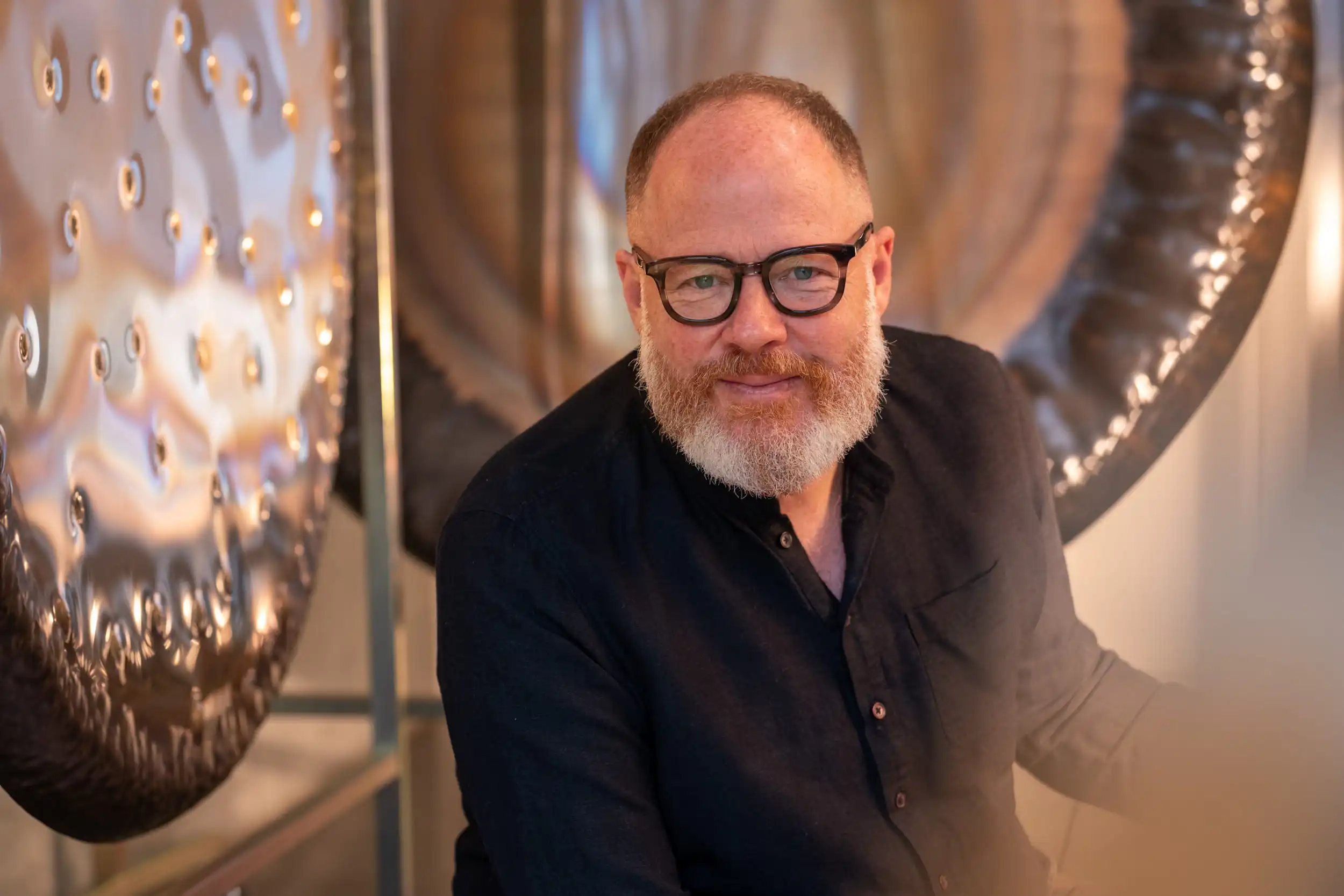
All sessions are led by Alan Steinborn — gong artist, teacher, and meditation practitioner based in Zürich. He has worked with gongs for ten years and taught meditation for over thirty. He has performed at the Fondation Beyeler and taught across Europe and the Americas.
His working principle: the inner state of the person playing is transmitted through the sound. This principle shapes everything — the preparation before a session, the playing during it, the silence that follows.
In which language are sessions held?
The gong bath itself needs no language. Sound crosses every linguistic border effortlessly.
Any spoken introduction or closing is offered in German and English. If you have a specific need or question, reach out beforehand and we will make sure you feel fully oriented.
How do I book, and what does it cost?
Sessions are held regularly at Das Gongbad, Seestrasse 416, 8038 Zürich. Current dates, times, and booking are available at dasgongbad.ch.
For specific questions about pricing, special events, or corporate and institutional bookings, reach out directly through the website.
What if I cannot afford a session?
We do not turn anyone away for financial reasons. If cost is a genuine obstacle, reach out directly. We will find a way. This has always been true and will continue to be.
Recorded sound meditations
The live gong bath is irreplaceable. But between sessions, recorded sound meditations have genuine value — for daily practice, for maintenance, for the moments when you need something and cannot get to the room. Here is an honest account of what recordings offer, and what they cannot.
What can a recorded gong meditation offer?
Quite a lot. A good recording can bring the nervous system into a quieter state, support sleep, reduce acute anxiety, and provide a point of stillness in a busy day. For people who have experienced a live gong bath, recordings can serve as a bridge — a way of touching the same territory between sessions.
They are particularly useful as a daily practice. Even ten minutes of focused listening — headphones, lying down, eyes closed, genuine attention — can shift the quality of a day.
What can a recording not offer?
The physical sensation. This is the irreducible difference. A recording plays through speakers that move air in a room. A live gong played at close range sends physical vibrations directly through your body — through your chest, your bones, your tissue. No speaker system replicates this. No recording delivers what the body receives in the actual room.
This is not a small distinction. For many people, the physical dimension of the live experience is the most significant part. If you have only ever heard gong recordings and wonder what the fuss is about, come to a session. You will understand within the first three minutes.
Where can I find Das Gongbad recordings?
Alan Steinborn's recorded gong meditations are available on Bandcamp at dasgongbad.bandcamp.com. These are recordings of actual sessions — not studio productions — and carry something of the quality of the live experience.
Free recordings are also occasionally offered to subscribers of the Das Gongbad newsletter. To receive these, subscribe at dasgongbad.ch.
How should I listen to recordings?
The same way you would approach a live session. Lie down. Use headphones if possible — the stereo field in a good recording carries something of the spatial quality of the live experience. Close your eyes. Give it your full attention, not background attention. Let whatever happens, happen.
Do not listen to gong recordings while driving, exercising, or doing anything that requires full alertness. The meditative states they induce are real.
Further reading and listening
A gong bath is a direct experience. No amount of reading prepares you for it or substitutes for it. But if your curiosity is pulling you toward the ideas and research behind this practice, here are some honest starting points.
What has Alan written about gong baths and related ideas?
The Das Gongbad Stories archive — available at dasgongbad.com/en/stories — contains over twenty articles on gong baths, meditation, music, and the art of living more presently. A few that speak directly to what is explored in this FAQ:
5 Gong Bath Benefits Having Nothing to Do With Gongs — on the non-acoustic gifts of 90 minutes with yourself.
Why I Am Not a Sound Healer — the philosophical position that shapes everything at Das Gongbad.
Seven Steps to Gong Bath Heaven — practical guidance for getting the most from a session.
Do This After a Gong Bath: 7 Steps for Self-Care — the integration practice in full detail.
Staying Together Through the Night — on community, presence, and what an all-night gong ceremony reveals about being held by others.
Live Music is Living Music — A Sonny Rollins Tribute — on what makes live sound irreplaceable, and how thirty years of listening to the greatest musicians alive shaped what happens in the gong bath room.
What books are worth reading?
The Healing Power of Sound by Mitchell Gaynor, MD — a physician's account of integrating sound and music into medical practice, grounded in research and genuine clinical experience.
The Power of Now by Eckhart Tolle — not about sound, but about the capacity for present-moment awareness that a gong bath supports and develops.
Wherever You Go, There You Are by Jon Kabat-Zinn — on mindfulness as a practice woven into ordinary life. The sensibility is exactly right for what Das Gongbad is trying to cultivate.
Just Note Gone — not a book but a short article by meditation teacher Shinzen Young, freely available on his website. One of the most practically useful pieces of writing on impermanence and how to work with it. Directly relevant to how we close a gong bath session.
What research exists on sound and gong meditation?
The scientific literature on sound meditation is still developing, but several studies are worth knowing.
A 2016 study in the Journal of Evidence-Based Integrative Medicine found significant reductions in tension, anxiety, and depressed mood following sound meditation sessions with gongs, singing bowls, and bells — with older participants showing the most marked improvements in depression scores.
A 2015 Slovenian study of 129 participants in gong-based sound meditation found that all participants described the effect of sound vibrations as healing or relaxing, with reported outcomes including long-lasting inner peace, improved physical and mental wellbeing, and increased desire for personal growth.
The broader literature on meditation and nervous system regulation is extensive and robust. The work of Herbert Benson on the relaxation response, Richard Davidson on contemplative neuroscience, and Jon Kabat-Zinn on mindfulness-based stress reduction all provide relevant scientific grounding for what a gong bath produces, even when the specific instrument is not studied directly.
The honest summary: the research supports what regular attendees report. The mechanisms are becoming clearer. The mystery remains.
Alan Steinborn is a gong artist and meditation teacher based in Zürich, Switzerland. He offers gong baths, sound meditations, and contemplative experiences for individuals, corporate teams, museums, and places of worship across Zürich, Basel, and the wider Swiss German region. His practice is rooted in thirty years of meditation teaching and ten years of gong work.